Sunday, December 18, 2011

12-18-11

We've had more problems with the drilling, our cargo hasn't arrived yet, and it is the one-day weekend at the station, so there's a pretty good chance I will be spending the day in the station again.

The drilling problem now revolves around the fact that we can't pump the water out of the holes quickly enough to prevent the holes from refreezing to the point where we can't pull the pump out. It seems there was a serious underestimate in the calculation of the rate of refreezing in the holes. Our drilling rig can't produce enough hot water quickly enough to raise the water in the hole much above freezing, and the ice surrounding the hole is it -50 degrees so it refreezes quickly. I think the solution this year will be substantially shallower holes, but it means a lot of work trying to resolve this issue for next year as shallower holes are less than optimal for the science we are trying to do.

Here is a layout I found online of the station. The above ground station that you have seen various pictures of is on the left and it is connected by an under-ice tunnel to the facilities on the right. The three main rooms contain vehicle maintenance facilities as well as power generation facilities. The first long room behind those contains the cold storage of a lot of food for the station and the room behind that houses the fuel for the station if my memory holds.


I'll continue with a tour of some parts of the station but a lot of information for those interested can be found here and a diagram detailing much of the layout of the station can be found here. I'll continue trying to find things to talk about and/or take photos of but I may be running out of ideas so if there is anything you would like to see or read about you can leave a message in the comments or shoot me an email.

Here is the main lounge for the station. It is in the same wing of the station as I am. There is a door to the left of this shot that goes to the berthing area where I stay. The door behind and to the left of the pool table goes to a video room where they frequently show movies. The door behind and to the right of the photo goes to main hallway of the station. This wing serves as an emergency station of sorts for the winter overs. If for some reason the other sections of the station were severely damaged or they lost most of their fuel and/or power generating capacity, they would all seek refuge in this wing. The kitchen in the left of this photo would become the kitchen used to provide food for the 50 or so residents.


This is the door behind and to the right of the pool table in the previous photo. You can see it has a seriously insulated door that would be closed in the event that the winter-overs needed to seek refuge in this wing. The photo doesn't capture it well, but there is a bit of a height differential between this wing and the station. The entire ice sheet that the station is on moves about 33 feet a year, but there is some uneven movement and heaving in the ice sheet which means that parts of the station may move in different directions than other parts and the station has been designed to allow for that.


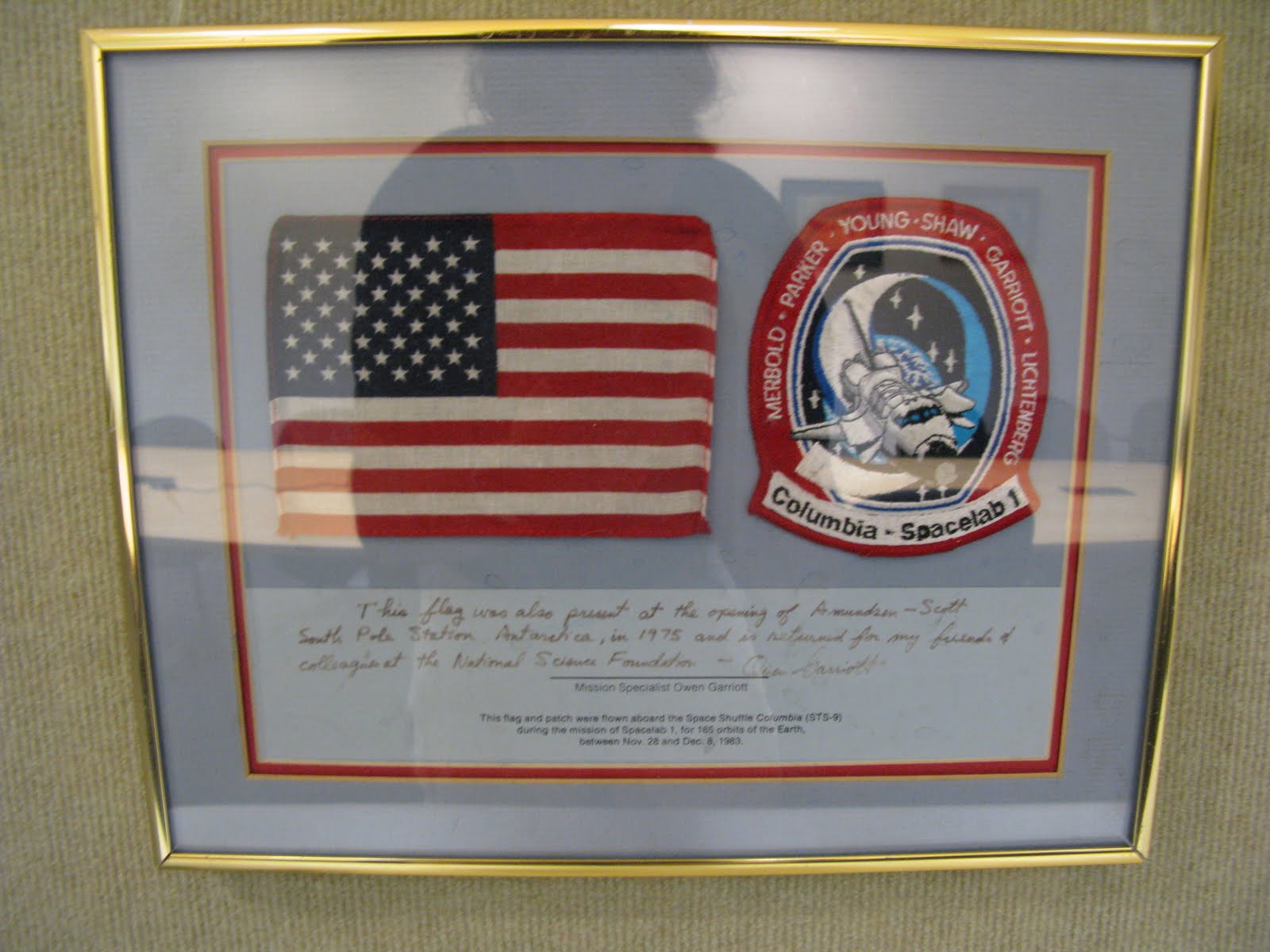
Another plaque of appreciation from NASA.


And another.


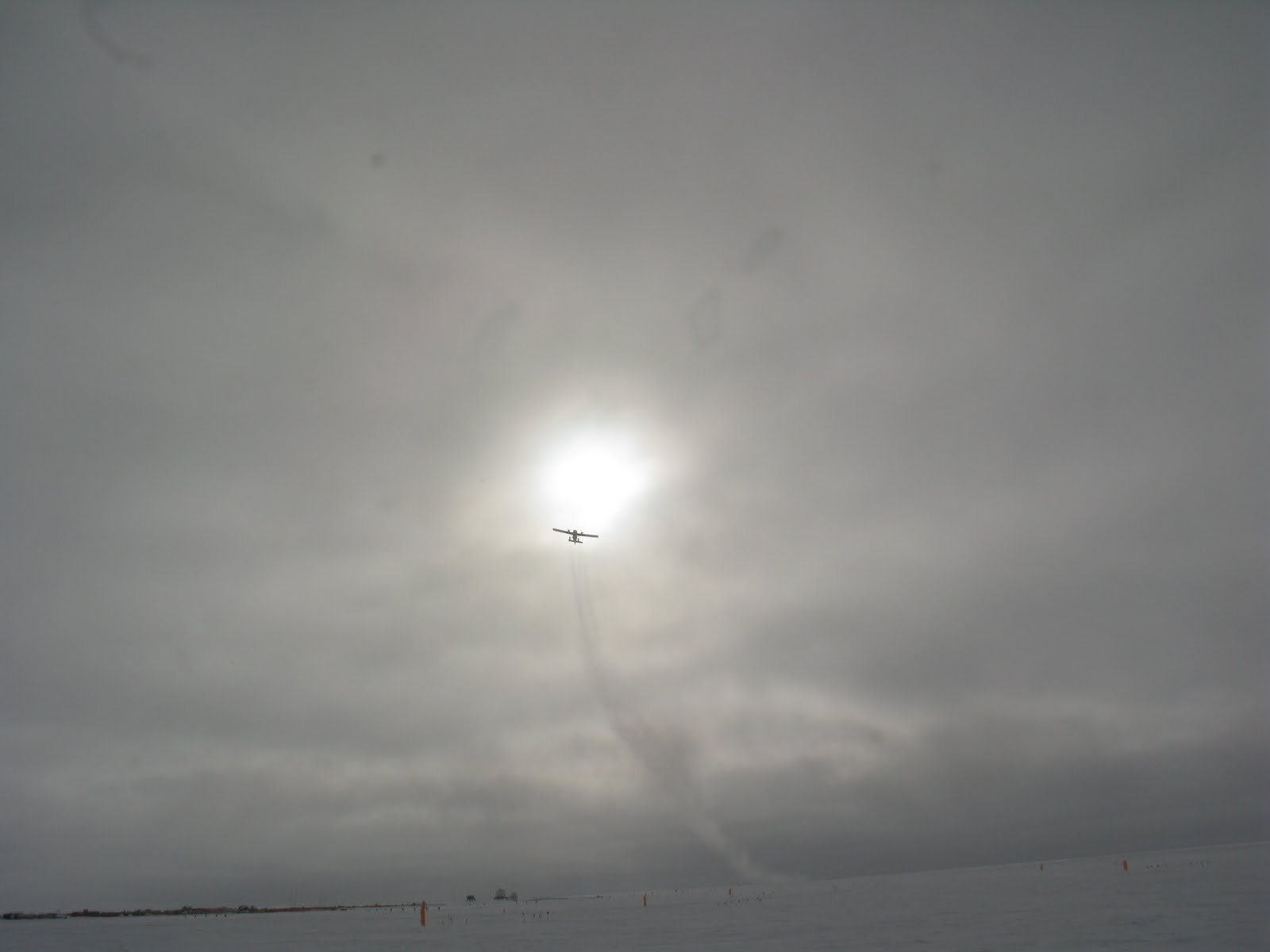
This is a photo I took a couple days ago of some tourists leaving. The ICL and the area where ARA is being constructed is across the skiway from the station, so they shut down crossing of the skiway when a plane is coming in or taking off, and I decided to take a photo of the Twin Otter leaving while waiting on the skidoo for the crossing to open again.
Saturday, December 17, 2011

12-17-11

Our cargo still hasn't arrived and the drillers have run into more challenges out at the site, so I've been spending most of my time in the station without much excitement going on. With that in mind, I'll show some pictures of the station.


This is the gym for the station If you look out the screens on the right, you would be overlooking the basketball court.


Here you can see the full size basketball court which served as the sleeping quarters for the Norwegians. I'm not sure if the Prime Minister stayed there or if he had his own room elsewhere, but it seems likely he slept here. The weight room is above and behind in in this shot.


Here you can see the Visitors camp which is probably a good portion of a mile upwind of the station. At peak population they had about 93 people, and our currently down to 35 with that number declining as more flights come in to pick them up. The station population is 212.


Here you can see the lounge area in the greenhouse room in the station. I'll get a photo of it, but basically it's just another room off of the hallway in the lower level. It is a nice place to be as there are plants and humidity to be appreciated.


This is the actual greenhouse which is behind the glass doors on the left of the previous photo. They have been growing a lot of flowers this year, which to my knowledge is a new thing. We have had a lot more fresh produce flown in this year. There are apples, bananas and oranges available at every meal, whereas last year that would happen maybe once a week or so. I don't know if it's overstock from the Prime Minister's visit, or if it reflects a real change. In the wintertime, the greenhouse is the only source of fresh produce the 50 residents have for about 8 months.

Friday, December 16, 2011

12-16-11

We have sort of run into a wall at work as the crate containing pretty much our entire experiment is apparently still in Christchurch, New Zealand. I think it will take at least two days to get here once they decide to put it on a plane. Unfortunately, there isn't much we can do without it.

The drillers have also run into some problems with the drill. Two days ago they sprung a leak on the drill hose which caused all the hot water to spray out of the hose on the surface which meant that the drill head which was 200 meters down wasn't getting any hot water. The drill head ended up getting stuck in the hole about 190 meters down as the hole froze in around it in a matter of minutes. It was our only drill head and apparently it was on loan from Australia. They used the reamer to drill another hole about 70 meters deep yesterday and were able to pump it dry, so they are going to try to drill our holes starting later today. When they are done with that I believe they will try to get the drill head out of the ice and then the station has work that they would like the drillers to do.

In other news, I finally found out why everybody burns popcorn here. The majority of the popcorn packets that the station has have been here long enough for the low humidity to dry out popcorn kernels to such an extent that there isn't enough moisture in them to cause them to pop when heated.


I know some of you may be interested in seeing a photo of me, so I've included one even though most of you know I really don't like having my photo taken. This photo was taken after the ceremony with the Norwegian Prime Minister. As you may recall, it was about -44F out at the time with windchill, but I will say that with the sun shining it really wasn't much of a problem for the half an hour that I was out there. I regretted not bringing the glove liners with me as the camera got pretty cold during all of it. As long as the wind isn't blowing to hard and there isn't much cloud cover, I've been able to go around in shorts for a while outside and because a lot of what I do is a mix between indoor work and outdoor work, it works out well so I don't spend too much time suiting up and taking it off again.

Thursday, December 15, 2011

Amundsen Centennial

A smaller crowd made it out for the ceremony to mark the time when Amundsen made it to the South Pole. I think it being at 4am didn't help, but there was a function for most of the important people last night and I'm sure many were up later than they would have liked. The weather wasn't the best at the moment, so I wasn't able to get a picture of the visitor's camp.


This man has crossed the continent solo and unsupported meaning no resupply. After being here and talking to people that have skied to Pole with in a group and with support, I find the feat pretty amazing.


This is the 78-1/2 year old grandson of the carpenter from Amundsen's expedition holding the watch Amundsen used during the expedition that Amundsen gave to this man's grandfather. He also skied to Pole and has a lot to be proud of.

Wednesday, December 14, 2011

Norwegian Prime Minister Ceremony Round 1

Currently the Norwegian Prime Minister is here to mark the 100th anniversary of Roald Amundsen and his crew being the first humans to make it to the South Pole. A number of activities have been going on in relation to it, and there are currently about 100 people living outside of the station. The station's population is 233 right now, so it is a sizable group. There will be a gala function in the gym in the station tonight that I was not invited to, but there is a ceremony at 4am tomorrow morning to mark the time that Amundsen arrived. I will probably go to it, and thanks to the current schedule for satellite passes, I should be able to upload some photos from it tomorrow morning.

Here you can see a brave soul playing the Norwegian national anthem when it's -28F out with windchill bringing it down to -44F. I didn't hear grumbling from the Norwegians so it was probably a fair rendition.


Here you can see the Prime Minister giving a speech. His English was quite good, as it seems to be with a number of Europeans. I heard that it was being broadcast live in Norway, but the rumor mill here is quite productive. It was filmed though.


He also unveiled a bust of Roald Amundsen made out of ice.


Here is a close up of it. I will go back out for more photos at another time as everybody else was trying to get shots of it afterwards. There is also a second bust in case this one means an untimely end.


Here you can see a Norwegian explorer who followed in Amundsen's footsteps and had arrived hours earlier. I had heard yesterday that they were still a few days out, and that originally the Prime Minister was to travel out a ways and meet them so he could ski in with them. Again I don't know how much of any of that is true but the speaker did acknowledge that there were still others out there. He also noted that they traveled at almost half the pace of Amundsen with Amundsen being at a technological disadvantage, traveling into uncharted territory, going both ways unsupported, and diligently taking regular measurements to establish latitude and longitude. However, Amundsen did use dog teams to get him here and ate the dogs along the way.


Here is the Prime Minister giving the Norwegian flag to the Station Manager.


Here you can see the crowd gathered around the ceremonial South Pole marker as well as the temporary visitor's center that has been set up for them. I'll have to remember to get a photo of their camp tomorrow before they break it down.


Lastly, a shot of the actual South Pole, well now it's about 30 feet away, but you may notice that a new sign was installed.

Test Drilling

Not much was accomplished on our side today as we are waiting on the crate containing our equipment to get delivered. However, I did go out of the station and make it over to the Ice Cube Lab or ICL. My apologies to those that haven't followed the blog from previous years as I may not go into detail on all the things I am talking about, but feel free to look at previous posts or ask me for more info if you're interested.

This is a shot of the ICL that I took last year, and basically the second floor is full of computers to handle the IceCube experiment and the first floor has work benches. The building will eventually get buried as the snow drifts around it and was designed with that in mind.


This again is a photo from last year, it is looking from the roof of the ICL towards the drill camp.


I took this photo today and it shows all that remains of the drill camp. The installation of the IceCube experiment was completed last year so the drill camp only serves to support ARA, the project I work on.


Here you can see them test drilling a hole. The holes will be 200 meters deep and will be pumped dry and our about 6 inches in diameter. This is in contrast to the IceCube holes which were more like 2 feet in diameter and 2 kilometers deep and the strings had to be deployed within a matter of 30 hours or so as the holes would freeze in because the water wasn't pumped out. These holes are drilled by pumping hot water down the hoze and our the drill head which contains nozzles to melt the snow and ice. It sounds simple, but a lot of work has gone into it over the years to figure out the number of nozzles, orientation of the nozzles, flow rate, water temperature, descend rate...


Here you can see some of the heaters which apparently were intended for use in car washes, but now are used to heat the water for drilling.


This photo shows the hot water tank and the entire drill train.


Adding snow to the hopper to be melted to supply hot water. They were using about 7 gallons of water a minute and getting about a meter of depth per minute.


Looking into the hopper which basically just has a hose spraying hot water onto the snow to melt it and supply the drill.


This is a shot looking out towards the testbed site for ARA as well as ARA station 1. The testbed site is near the horizon in the middle of the photo. We installed it last year as more of a test of engineering than for actual physics, however it has been working without any major problems for almost a year now.


This is zoomed in a bit on the test bed site. If you look carefully, you can see a Pisten Bully and some people as well as a wind turbine. Eventually, if our project gets fully funded, we will need stations to be self powered, so we are looking at using wind turbines and solar panels to supply our power needs. The problem with solar is it only works half the year. The problem with wind is it isn't constant or predictable and we haven't managed to find a turbine that can survive in these conditions. They installed the wind turbine at the test bed recently to see if we get any electromagnetic interference from having the turbine so close to our radio antennas.


This is a photo of ARA station 1. In it you can see a van with tracks, some people, a sea container that has been re-purposed into a meeting space, a 3000 gallon fuel tank and a trenching machine. They are going full speed on getting the site ready for deployment and may have it ready by early next week.


A shot of the South Pole Telescope in an orientation that I don't remember seeing before.

Tuesday, December 13, 2011

South Pole

Here's a photo of the cockpit of the LC-130. There are four crew members up top and two people to handle the cargo in the back.


The flight only had 3 people going to the South Pole on it my coworker, myself, and a scientist who was just a day-tripper meaning he was catching a flight out later in the afternoon. There was also a technician onboard to help monitor the liquid helium dewars on the flight.


The mail bag. Even though it isn't the actual postal service delivering the mail, I'm still amazed you can mail something from Alaska and get it down to the South Pole for less than the cost of a candy bar.


Even though you can't tell from this photo, they leave the engines running while at the South Pole which means the propellers are spinning. An interesting thing about the C-130 is that the propellers spins at the same speed even when it's parked like this, they change the angle on the blades to adjust the thrust.


Another shot of the LC-130. It was a balmy -46 degrees F with windchill at a physiological altitude of 10,700 feet. I believe it was about 15 degrees warmer and a couple hundred feet lower in effective altitude when I arrived last year, but it seemed warmer and easier to breath this year.


I got lucky again and got a room inside the station. They have a summer camp outside, which isn't too bad except you have to suit up and walk a couple hundred yards to get to the station for your meals which means taking off your gear again. This year my room is on the outside of the hallway, so I have a window, but it is about 1/3 narrower than the rooms in the middle of the building.


Here's the view outside my window, which will be much the same 24 hours a day.