That being said, I want to thank all of you for following along. As with most things in life, it's always more fun to share in the experience with others and while I can't share Antarctica with you directly, this blog allows me to share a tiny sliver of an experience that I truly wish I could share with all of you. I don't know that I'll ever have the opportunity to go down again, but I would do so in a heartbeat.
I'm currently in Christchurch and will be starting my return to the states tomorrow.
My apologies for not keeping up with the posts towards the end, things got stressful at work and the satellite coverage kept getting earlier which didn't lend itself for making posts. That being said, we accomplished most of our objectives for this deployment, but unfortunately things look dicey for our computer system. People should be heading down to install that in a matter of weeks, but the last I've heard it is still failing the cold testing in Hawaii. While it may not be the finish I would like, we learned a lot doing stuff we had never done before so this season has been quite the success and should enable us to be much more successful in the future.
I'll share a few shots I didn't take.
Here is a photo of me from the race around the world on Christmas day. They still hadn't gotten the race around the world t-shirts to Pole by the time I left, so I may not get one this year.

Here is another shot from the station looking out towards part of the race. You can sort of get a feel for the conditions from this shot. I don't know how to describe it, but when you're driving without any sort of definition because of the flat lighting, it's like driving in a cloud. You sometimes only make out literally a foot in front of you which makes for a lot of unexpected bumps.

Another photo of me. For those of you who can't tell, or don't know I'm in the front with the goggles and face mask.

Here is a photo of the previous photo being taken. There is a communal drive at the station where people upload photos and you find neat shots like this pair on it.

Another shot of me.

And a shot of the float that I didn't get any photos of.

I spent a few days at the South Pole outside testing our equipment. One person has to run the test equipment, and another person (myself) has to hook up each channel one at a time. This is considered one "string." It has two vertically polarized antennas that look basically up and down although only one is in the photo. They are the white antennas that sort of look like two birdcages put together, designed by Hawaii and made by Taiwan. There are also two horizontally polarized antennas designed and made by Wisconsin which are the cylinders with the copper tape. All the antennas have a rectangular box shortly after the feed point which houses and amplifier. The signal then gets sent up coaxial cable to the gold cylinder where it is converted to a fiberoptic signal and sent the rest of the way up the hole. That fiber than feeds into the silver box in the lower right which converts it back to an RF signal and amplifies it before being sent to our computer system which is not photographed. Our system has four strings, each string has four antennas for a total of 16 antennas or channels. There are also two calibration holes with antennas which send out calibrated signals for us to use on our system and four large(10ish feet long) surface antennas which were made by the Germans this year. A coworker and myself assembled and installed them, but I didn't get any photos because I was in a rush to get it done so I could pack my stuff up to leave the South Pole.

I don't know why the last two photos I uploaded are rotated, but it will probably remain a mystery. Here you can see the insides of the one of the gold cylinders. The signal comes in at the bottom for each of the four channels where it gets sent through a module that uses a laser to send it up the fiber. You can see some of the fiber in blue connected to the main fiber bundle which has four colors at the top of the photo. Needless to say our experiment isn't the most glamorous and deploying and string is not nearly as photogenic as launching a gondola, but that's how it goes.

Here you can see the deployment sled being towed out towards our site.

Here you can see people getting ready to lower in a vertical antenna down the hole. At the end of it we were able to deploy a string in about two and a half hours however that involves a lot of prep work. I spent hours just tying all the knots for the antennas.

This was actually one of my favorite views while I was there this year, but it came out as nothing on film. This was taken at the site we were deploying our strings at and the sun was just coming through parts of the clouds and lighting up the station and some of the flags from IceCube.

Here you can see the crowd for the moving of the South Pole marker. Every year on January first they unveil a new South Pole marker and because the ice sheet moves about 30 feet a year at the South Pole, it's about the only time the marker is in the right spot. I had heard the winter overs designed and machined the marker during the winter, but now I think they just design it as I can't imagine them machining the recent designs with the machines they have available.

Here's the new marker.

A shot of the other side.


Here you can see the South Pole Telescope with the new panels on it. You can also see the South Pole Christmas tree.

This is a shot of the site we used last year to install our testbed set up. We were looking at the feasibility of digging out the old computer system for use in our current site. The main box housing the electronics was buried under about 3 feet of snow which is about right as it sat in a trench a few feet deep and you get less than a foot of drift each year.

A shot of some sastrugi near the test bed site.

Here you can see a LC-130 coming in for a landing at South Pole.

My hero shot at the ceremonial South Pole.

The ceremonial South Pole marker. They actually rotated it 180 degrees so the station would no longer be in the background so the news broadcasts would look so much more dramatic for all the centennial celebrations.

The ice sculpture of Amundsen had lost a lot of detail in the few weeks it had been out.


The silver ball was originally used to photograph the auroras, but you can't see the auroras in the summer.

Here you can sort of get a feel for the distance between the ceremonial marker and the actual South Pole.


The station was designed like an inverted wing so the wind would speed up below the station to help prevent the buildup of drifting snow. It seems to have worked pretty well as I they don't spend nearly as long buldozing the snow as they did with the Dome. The hole station is designed so it can be jacked up at least one story if not two to deal with the rising snow.

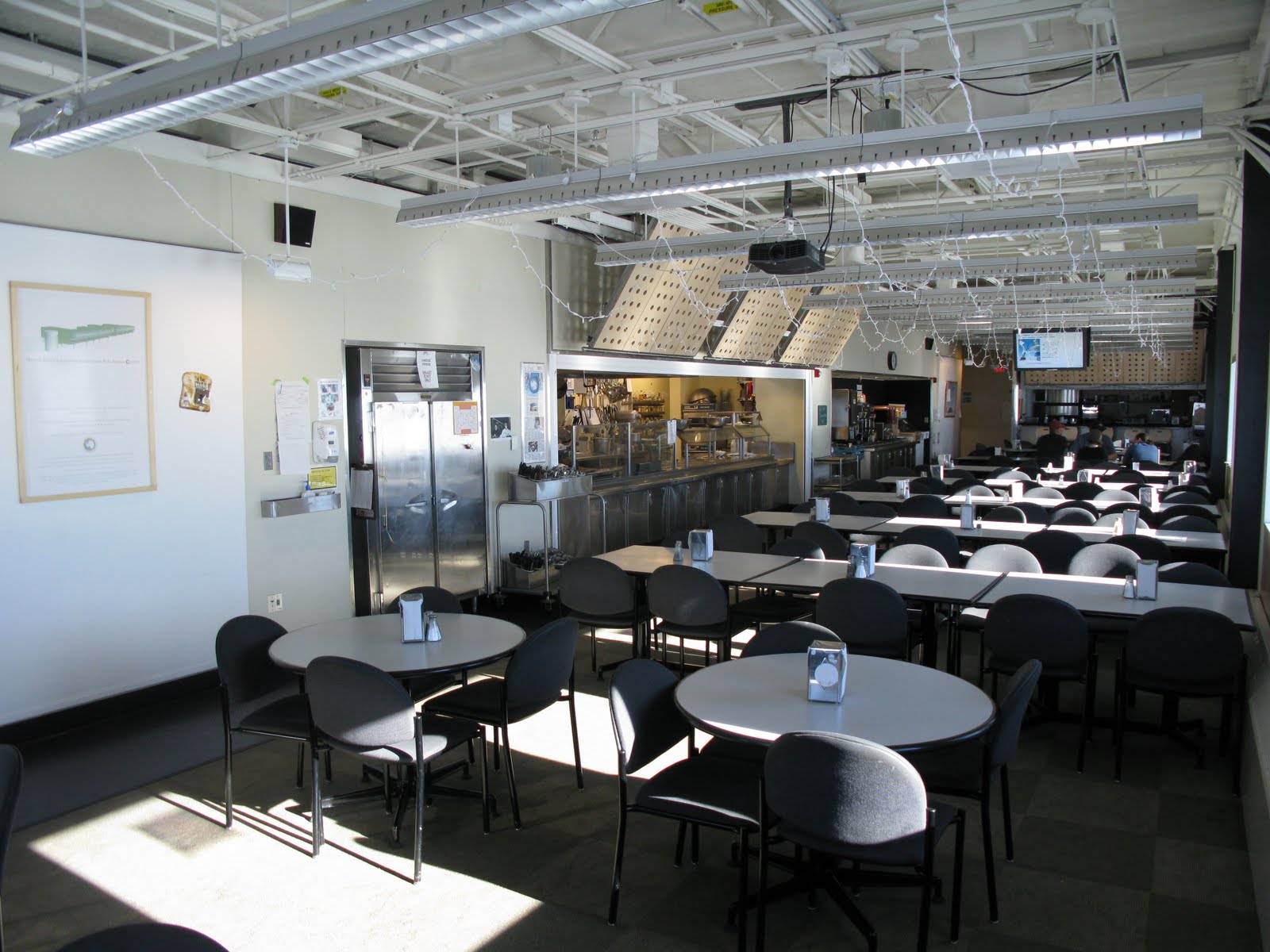
This is a shot of the galley. My back is to the three windows in the upper right of the station in the previous shot. It definitely feels a little funny to be sitting in the galley in shorts and a t-shirt watching the people arrive who skied or drove from the edge of the continent spending their 10 minutes at the South Pole marker before heading back. The tourists aren't allowed into the station without arranging for a tour which means that most of the people who make it to the South Pole don't even get to come in to warm up.
Here is a shot of the LC-130 that brought us back to McMurdo from the South Pole.

Again it doesn't come out as beautiful as it actually was. This is taken from Pegasus Airfield near McMurdo. Mount discover is on the left, Black Island which houses the satellite uplink for McMurdo is in the middle, and the TransAntarctic Mountains are on the right.

So we were supposed to fly out of South Pole on the 3rd, but about an hour into the flight from McMurdo that was going to drop people off and pick us up, it turned around for mechanical reasons. I heard later in the day that the flight had hit a skua which cracked the windshield so it had to turn around. After seeing this, I figured the rumor was true, but the "true" story is the pilots noticed a crack during flight and went to a lower altitude to see if that would help, but it ended up basically cracking the entire window so they turned around and landed. We ended up getting out of the South Pole the following day after another weather delay.

Here you can see the trailer for one of the new vehicles USAP had delivered last year. I heard that the truck and trailer can't easily negotiate the turns going to McMurdo, so they aren't being used. Again I don't know if that's true or not, but I've didn't see them in use at all.

One of the Baslers. They are basically modified DC-3s.

Here you can "see" McMurdo in the background. It's basically in the valley in the middle of the island. Castle rock is the formation sticking up behind and to the right of McMurdo.

Here is a firetruck at Pegasus.


An ambulance.

Another firetruck. We landed about 9:45 at night and our flight out didn't leave until 4 the following morning. We were left out at Pegasus instead of being driven the hour or so back into town which was fine by me. There was a galley out there to feed the workers at the airfield but we were told we were only allowed coffee which was understandable because they only bring out enough food to feed the workers that were out there. It turns out the galley staff brought food out for us, but it was sent back before we found out.

USAP also got new vans this year. I do like the trailers because with all the gear you have to carry around with you, it's nice to have the extra space inside the van for passengers.

Some helicopters waiting to be flown out on C-17. It looks like they will be flying a C-5 in a the end of the season as well as some 757 flights to get the last people off the continent before winter.

The C-17 coming in for a landing.


Here you can see them loading cargo onto the flight. We also had a propeller from a C-130 on there as well as some cargo that needed to be kept refrigerated. I guess it was easier to just chill the whole cargo area than the cargo that needed it which made for one of the coldest flights I can remember.


